
How to Choose Safeguarding Software for an Early Years Setting
A practical guide for nurseries, preschools, children’s clubs and early years groups
Information Checked September 2026
Choosing safeguarding software is not simply about finding a safeguarding button
A good system should help you protect children in practice, not simply give you another place to store information.
The more useful question is:
What happens when somebody notices something that may matter?
A good demonstration should show you the whole journey, from the practitioner recording the first concern through to the person responsible seeing it, deciding what to do, recording actions and outcomes, and being able to look back later and understand exactly what happened.
That matters particularly in early years, where concerns do not always begin as obvious safeguarding incidents. They may start with a change in behaviour, an injury, an absence, something a parent says, a small wellbeing concern or something about practice that does not feel quite right.
First understand what type of system you are looking at
Not all safeguarding software starts from the same place.
Some systems are specialist safeguarding platforms. Others are broad nursery-management systems that include safeguarding alongside attendance, learning, parent communication, finance and staffing. Others are wider compliance or people-management platforms with safeguarding as one part of the offer.
None of those models is automatically right or wrong. The important question is whether the safeguarding element is robust enough, accessible enough and visible enough for the way your setting or group works.
You may already have safeguarding inside another system
Many nursery-management platforms already include safeguarding-related functions. Famly, for example, publicly describes secure safeguarding notes, accident and incident reporting, body maps, parent acknowledgement, attendance monitoring and headcounts alongside its wider nursery-management functions. Ovivio includes safeguarding areas within child profiles, accident and incident reporting, accidents from home, medication records, attendance, learning, parent communication, finance and wider operational tools.
That may be exactly what some settings need.
But the important question is not simply whether safeguarding is present.
Ask whether it is:
• robust enough for the concerns you need to record
• quick enough for practitioners to use in the moment
• accessible to the right people without exposing confidential information
• visible enough that urgent information cannot be overlooked
• strong enough to hold the actions, decisions and outcomes that follow
• clear enough to reveal patterns over time
• easy enough to turn into a chronology or report for an external professional
Digital does not automatically mean visible
A concern can still become lost even when everything is digital.
If safeguarding information sits alongside attendance, invoices, parent messages, learning observations, staffing records, diaries, bookings and other operational information, ask how the system makes sure an important concern stands out.
The question is not whether the information has been saved.
The question is whether the right person knows it is there, sees it quickly enough and follows it through.
This is particularly important if your safeguarding function sits within a broad nursery-management platform. Ask the supplier to show you exactly what happens when something serious is entered among all the other information the system holds.
1. Start with the people who will actually use it
Can the whole team record a concern easily?
That may include practitioners, bank staff, students and volunteers.
They should be able to record what they notice without being given access to confidential information they do not need to see.
If recording feels difficult, takes too long or can only be done by senior staff, important information may never make it into the system.
2. Ask what happens after someone presses submit
Do not stop at being shown the form.
Ask the provider to show you:
• who is alerted
• how they are alerted
• how quickly
• what happens if the usual safeguarding lead is absent
• whether the concern is acknowledged
• where the later decisions and actions are recorded
Several systems can say they have alerts. What matters is what actually happens in practice.
3. Look at safeguarding and wellbeing separately
Not everything worth recording is an urgent safeguarding concern.
A wellbeing observation may be small on its own but become important when seen alongside other information.
Ask whether the system lets you record lower-level child, family or staff wellbeing without turning every entry into a safeguarding case.
Then ask whether those wellbeing entries can still contribute to a wider picture when patterns begin to emerge.
4. Ask how complaints fit into the picture
Complaints should not automatically sit completely separately from safeguarding.
A complaint may remain a complaint, but it may also reveal something about practice, staff behaviour or a child’s welfare.
Ask whether you can see:
• the original complaint
• acknowledgement
• investigation
• actions
• evidence
• outcome
Also ask whether relevant information can contribute to a wider safeguarding picture rather than remaining isolated in a separate administrative record.
5. Ask what whistleblowing really means
Words such as confidential and anonymous are not necessarily the same thing.
Ask: Can a member of staff genuinely raise a concern without their identity being visible to the person receiving it?
Also ask what happens if the concern is about a senior person.
The practical question is not simply whether a system has a whistleblowing feature, but who can see the report and how it is routed.
6. Follow the chronology
Ask to see a real example from beginning to end.
Can you see:
What was noticed → what was considered → what was done → what happened afterwards?
A good chronology should make sense months later to someone who was not involved at the time.
That may be a safeguarding lead, Social Care, the LADO or an inspector.

7. Look carefully at permissions
Ask the provider to show you what different roles can actually see.
A practitioner may need to record a concern without being able to read previous safeguarding records.
A manager may need wider access.
A group safeguarding lead may need to see information across more than one setting.
Permissions should reflect responsibility, not simply job titles.
8. If you run more than one setting, ask what the group can actually see
Do not settle for the words “multi-site” or “group dashboard”.
Ask to see:
• what senior people can see across settings
• whether they can identify outstanding actions
• whether alerts can be routed appropriately
• whether permissions differ between setting and group level
• whether patterns can be identified across settings
• how implementation works across the organisation
The useful question is not whether the supplier says the system works for groups. It is what the people responsible across the group can actually see and do.

9. Ask what can be shared externally
Ask to see the actual report or export.
Could a social worker, LADO or inspector understand it without someone rewriting the history first?
Check whether it clearly includes:
• the original concern
• dates
• actions
• decisions
• outcomes
• chronology
• relevant attachments or evidence
10. Ask what happens when a child leaves
Different systems handle this very differently.
Some are designed around continuing records across settings or phases of education. Others provide secure export and transfer of information.
Neither approach is automatically right or wrong.
Ask: What exactly happens to the record, who remains responsible for it and what does the receiving setting actually receive?
11. Look beyond the headline price
Ask for the full cost in writing.
Include:
• set-up
• annual or monthly subscription
• VAT
• training
• onboarding
• data import
• SMS or notification charges
vadditional modules
• group functionality
• integrations
• support
• renewal terms
A lower headline price may not be lower once everything you need is included.
12. Ask how easy it is to leave
This is easy to ignore when you are buying.
Ask:
• What is the contract length?
• What notice is required?
• What happens to your information if you leave?
• In what format can you retrieve it?
• How long will the supplier retain it?
You should know the answer before you sign up.
The simplest test: ask every provider to show the same scenario
Do not compare systems by letting each supplier show only their favourite features.
Give every provider the same real-life scenario.
For example:
A practitioner notices a mark on a child and records it from the room.
Then ask them to show you:
• how the practitioner records it
• what the safeguarding lead receives
• what happens if the safeguarding lead is away
• how the concern is acknowledged
• how actions and decisions are added
• how previous wellbeing, injury, attendance or family information appears alongside it
• what the final chronology looks like
• what would be shared with an external professional
If the safeguarding function sits inside a wider nursery-management platform, ask the supplier to show you the same journey without skipping over how the concern is distinguished from all the other digital information held in the system.
Ten minutes following one concern through a system will often tell you more than a long feature list.
One final question: could important information get lost?
This is worth asking regardless of which type of software you choose.
Can the system help make sure that:
• a small observation is not forgotten
• an urgent concern is not buried
• a complaint is not isolated from relevant safeguarding information
• a wellbeing note can contribute to a wider pattern
• an action is not left unfinished
• a group leader can see what they are responsible for
• the chronology still makes sense months later
Safeguarding information should not simply be stored. It needs to remain visible to the right people, connected to what happens next and usable when decisions have to be made.
Final thought
Do not choose safeguarding software simply because it is the biggest name, has the longest list of features, comes bundled with another system or appears cheapest.
Choose the system your team will actually use, that gets information to the right people quickly, that helps leaders follow concerns through properly and that makes it possible to show, clearly and confidently: what was noticed, what was done and what happened next.
Sources checked:
Famly: safeguarding in early years software, nursery-management software and accident/incident reporting information
Ovivio: nursery-management features, child profiles and safeguarding/accident and incident reporting information
On the Button comparison material prepared for CPOMS, MyConcern, Impact Early Years, SAEL, Otii and PeopleBunch
Accuracy note: Software features and packages change. Check anything important directly with the provider before making a buying decision.
Already comparing safeguarding systems?
We’ve also put together a more detailed comparison to help early years settings see the differences before deciding what works best for them.
About the Author
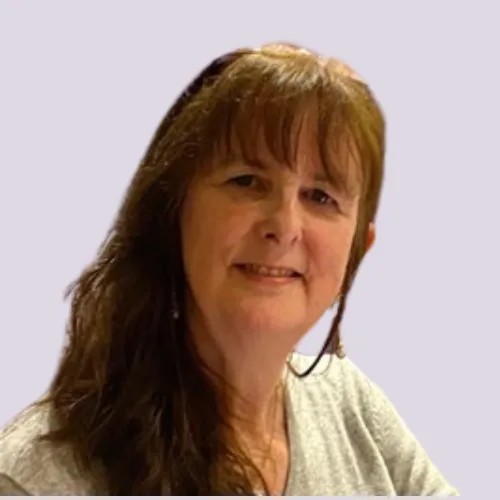
Catherine Lyon is an early years expert with over 50 years of experience across the sector. Her professional foundation began with the NNEB and NNEB Advanced Certificate, and her career has gone on to include leading her own Outstanding and nationally award-winning nurseries, working as an Ofsted inspector, serving as an internal quality assurer for early years qualifications, and setting up a nationally award-winning CACHE Training Centre. Throughout her work, Catherine has remained focused on strengthening early years practice while keeping the child at the centre of decision-making. Her experience spans hands-on practice, leadership, inspection, quality assurance, training, mentoring and consultancy. Read more about Catherine Lyon.
Main Menu
Find out who will support you and listen to your ideas about On the Button, with the aim that safeguarding is paramount in nurseries and preschools, with well-being, complaint management and compliance supported clearly alongside it.
Extra Info
On the Button, Quality Early Years Ltd. 10761378 (Est. 9th May 2017) Dickens House, Guithavon Street, Witham, Essex, England, CM8 1BJ
WhatsApp 07424 868955 Phone 01917 436785 © Quality Early Years Ltd 2026


